What the Seasons Can Teach Us About Work, Rest, and Raising Children with Kerry Hasler-Brooks
What if a flourishing family life depends less on doing more and more on recovering rhythms of work, rest, attention, and belonging? Christine Perrin talks with Dr. Kerry Hasler-Brooks about the life she and her family have built on a small Pennsylvania farm, where agricultural seasons make limits, dependence, and renewal impossible to ignore. Their conversation explores how parents can create room for boredom, Sabbath, reading, meaningful work, and life together, even without radically rearranging their circumstances. Kerry also reflects on technology, simplicity, literature, and the formative power of returning to the same places and texts over time. For families feeling crowded by schedules and competing demands, this conversation offers a hopeful vision of choosing what to value and making space to live accordingly.
Along the way, Kerry considers the sustaining power of literature, from Zora Neale Hurston to Emily Dickinson, and the way reading can help us attend more deeply to ourselves, one another, the natural world, and God. Her reflections suggest that formation often happens through ordinary practices repeated faithfully: walking the same ground, rereading a beloved poem, sharing work with children, welcoming others, and protecting stretches of time in which nothing has been planned.
Transcript
Kerry Hasler-Brooks: Even if we never made a lot of money, even if there was some worry about sort of how everything was going to work, we knew that we couldn't fall into a life just because it was in front of us. When you can be physically aware that your environment, your place has been home to so many other people, it's profoundly humbling. It's also profoundly, like, relieving.
Christine Perrin: This is Christine Perrin, host of Composed, A Timeless Way of Living, a podcast of the Humanitas Institute that explores living patterns of virtue, craft, community, and delight, and draws the classical tradition into contemporary times. Kerry Hassler Books, welcome to Composed. Thanks, Christine. Good to see you. Good to see you too.
I'm gonna read your formal biography, and then we'll get to the fun part, the informal. Kerry Hassler Brooks is associate professor of English and chair of the department of language literature and writing at Messiah University, where we have worked together. Her teaching and scholarship focuses on twentieth century and twenty first century women writers, feminist pedagogies, vocation studies, and she is a mentor extraordinaire. Her family has a farm, and this has really influenced and shaped and framed the way that they live their life together in Pennsylvania. So Kerry, tell us a little bit about the kinds of things that brought you to this life that you're living, and maybe tell us a little bit about the farm to start out Thanks,
Kerry Hasler-Brooks: Christine. It's really lovely to be here with you this morning. So we have a we have a 12 acre farm in Chester County, Pennsylvania, and we've been there for about a decade. And the journey to that life, and also my life as a as an educator, is maybe like all of our journeys, it's pulling on lots of different kinds of strands. We very intentionally moved to the place that we that we are now, Tainantoio Farm in Chester County, for for the land, for for the place of it.
We didn't know anyone there, and we had to build community there. So it really was a call to the place and to the life of, you know, being tethered to nature, being tethered to sort of agricultural rhythms, and wanting to build a really specific kind of life. So, you know, we can talk in detail about sort of the the the path we took as young adults and what shaped us as as children, my husband and I. But we we pretty clearly came to understand in our very early twenties that we did not want to just sort of fall into the life that was in front of us because of a job or a housing opportunity or whatever. We we sort of did that a little bit in those early years of nervousness, like, I gonna make it?
Am I gonna be okay? Did some some things that were not bad vocationally or in terms of a life, but were not really chosen by us so much as they were the things we felt like we needed to do. And then we really pulled back from that, and I think took the idea of vocation really seriously and thought very holistically about our lives. And that's where my work as an educator, as a researcher, as a mentor, as you say, and my husband's real commitment to not just sort of farming in terms of nature and agriculture, but in terms of community and the way food connects us to each other as as people who are growing food, but also, of course, sharing food with others. So we think really holistically, and, you know, you can only sort of look back at where you end up and sort of see the wholeness of it if you sort of look at all the individual parts that have have made it.
So it's been piece by piece formed, I think, over the last many years.
Christine Perrin: There are so many things that you've just said that I wanna follow-up on, but I I guess I'll just start with this. And that is that what I ask people in this podcast is what are the living patterns in your life? And I wanted to talk to you here because you more than many people have shown me what it looks like to look for living patterns, to self consciously decide as you're describing. We want this, and we wanna make this, and it's not necessarily what we've been given by the lives we led up to this point. And it's shaped by many things.
It seems shaped by literature. It seems seems shaped by a love of nature, which you were given growing up, I know. And and then you had to set out and and figure out how to do that. But I'm wondering where having a farm leaves you in terms of seasons. How do you think of seasons?
How has it taught you about seasons? And is there a secondary question which you can get to whenever is, was there anything in literature that accompanied that recognition or growing dawning awareness?
Kerry Hasler-Brooks: Yeah. As you and I have discussed many times, seasonality and sort of cyclical moves of of a day and of a month and of a year, we my husband and I and our children were very, very aware of that in not just a sort of, like, abstract way, like, oh, it's it's kinda getting warmer, and I better plan my my summer vacation. Right? But in a really, really tangible way. And I think that in terms of seasonality, like, I think of it most in terms of, like, rigor and exertion and really intense work that comes with, you know, being, you know, farmers, but also in terms of being an educator.
There is exhaustion. There is labor. There is sweat, be it physical, emotional, spiritual. But there is also always on the farm. We're very mindful of those moments and those seasons of rest.
My husband, he's the primary farmer. Right? Like, I'm sort of along as a vocational partner, but he is steering the ship in many ways. He is just now, in the last couple of weeks, really, like, returning wholly into the labor of farming, the physical labor of farming, and he's coming off this couple months period where he has restored his body. Farming is very hard work.
It is clear to us often why many people a couple generations ago really wanted to remove themselves and their children from the labor of farming because it is physically exhausting. And yet, being able to really, like, be fully in the labor of it, and then know that there will be respite and restoration for your body as well as for the land, you know, that idea of fields going fallow and being left to sort of rot and decay and, you know, rebuild the soil. Enrich. That's right. In order to be able to produce something again.
I think that is it is a real gift to be able to participate that in that in a really regular kind of way. And in a way that, you know, we often laugh and sort of wonder, like, what would our life be like if we were people who had access to ten days of vacation from our work every year, or fourteen days of vacation, or, you know, whatever it might be. And that is just so it's so outside of either of our of our contexts professionally in our work. And so we're sort of we're in this much larger thing. Right?
Like, we fall into the systems and the cycles that are much bigger than us. They have to do with weather. They have to do with storms. They have to do with the natural world. They have to do with the ancient world.
And it's really lovely Chemicals. Yeah. And it's really lovely to, like, pull back from, like, this sense of rest is just a thing I get to curate for my seven day vacation that I'm going to take with my family to this destination spot, and think instead about rest as this really, like, human fundamental foundational thing that's built into to every part of what we do. I didn't really talk about the literature. I I can.
Christine Perrin: That's okay. We'll get there. Right now, in response to your talking about rest, I'm wondering if the Jewish concept of Shabbat has been meaningful to you at all. Because, of course, as you're saying, this is very ancient Yeah. And also even prescribed.
Yeah. And yet, we've lost track of it. And you're describing the way that the body you know certain things about the body that people who don't farm don't know.
Kerry Hasler-Brooks: Yeah. I mean, when I think about rest, it is body, it is mind, it is shared, it is private, it is, you know, intellectual, and I think it is tethered to kind of church calendar. It's tethered to church traditions. I don't think about Shabbat specifically necessarily, but I think that there are ways that humans have been much more practiced in labor and rest, labor and rest, labor and rest, that that rhythm, than we are now. We sort of culturally have pulled ourselves out of those very, very long standing patterns.
And even things like, you know, Sabbath every once a week, right, as a real thing. And and I feel like I have access to sort of this knowledge that Sabbath is so important, and yet it's still something I have to fight for. Right? Every single
Christine Perrin: week That's interesting.
Kerry Hasler-Brooks: Carve it out. So I I think that we're we're always very mindful of how much like, we're we're resting on a whole tradition and way of being that is much deeper than us, and we're sort of calling out to that and trying to bring that into our into our lives. But we're also really aware that even though that feels so foundationally human, it
Christine Perrin: is also so weird. Alien.
Kerry Hasler-Brooks: Yes. It it really is weird to many people who just sort of stare at you when you even mention that you live on a farm. And in on the kind of farm that we that we live on too, where it's not hundreds and hundreds and hundreds of acres of corn, but it is really it is small, and it is intimate, and it is the field where my husband grows for our CSA members is the same field that, you know, my son, he's a runner now. He runs around the field training for his track meet, or where my daughter collects rocks to build her fairy house in in the tree house. Like, it's all on top of each other.
It's very intimate and personal. And there's just very little context for that for most for most people, I find. They can't even quite imagine what I mean when I talk about the farm. I love
Christine Perrin: your language of resting on ancient ways that are still that are very alien. Yeah. But that you have this little tunnel toward. And also the fact that even despite your commitment, you have to sheepdog, so to speak, the choice of pasture and the the space that you're creating. I like to think of the other way of thinking of time as twenty four seven convenience store hell.
That's how I describe it to myself in my mind. Well, you and I grew up, I think in a time when the grocery stores weren't open twenty four seven, There weren't a lot of convenience stores. But it strikes me that you have this experience that requires contact with in order to know. It's not something that you can simply hear about and enact, but you have to live your way into it. Yeah.
And I'm wondering if you could tell us some things about that you know about winter or Yeah. About spring or Yeah. You know, when I say those things, what do you think? What what would you tell us of that intimate experience that you've had that we haven't probably had?
Kerry Hasler-Brooks: Yeah. I love that question. I mean, my immediate the responses that are percolating are there's two different kinds of responses. Like, instinctively, I think, well, you know, what's happening in the the physical, ecological, sort of natural farm in these different seasons. What are the different plants doing?
What is what shape do they have? Right? What color do they have? What does it look like, smell like, feel like? I think all of those things are really important.
But I think actually how I wanna answer your question is more about, like, how we are interacting with the physical space. Right? So I know it's spring, not necessarily because of the red buds that are forming on the trees, right, or the Lenten rose that's starting to come up, or, you know, the leaves that have really started to rot quite quite robustly in my flower beds. Like, those are all signs of spring, certainly. But I'm most aware of spring because of how we are interacting with the farm.
Right? My husband is you know, he puts in his he sort of assesses his seed library every spring in in February, and and that is it's just in the basement of our house. He's not, like, out on the farm doing it, but it's that sort of every year, he's going to do that, and he's gonna spend time with this material of the seeds. He's gonna start walking the fields. Right?
We'll we'll get our boots muddy for the first times, and, you know, we'll we'll sort of see where what field's gonna be fallow, what field is gonna be growing in, what you know, we sort of assess that. But we're we're also imagining the work that's gonna happen next and starting to do it. And I think that is that relationship with the natural world that we're interacting with it, like, that's the the the sign of spring to me. I think for a lot of people, and and myself included, right, like, is something that we we see in pictures. We might engage with it on a walk.
We might even, like, collect things on our walk or touch things or like, you can really be in it, but unless you're, like, really, like, in the mud quite literally, and that is spring. Spring is mud. Spring is more mud than anything else on our farm. You know, it's just there's a little bit of a a disconnect from it. I think there's also something so, you know, when I was describing our journey to the farm, my husband and I, as as young adults, were very aware of sort of our we were searching for place in some ways.
Right? Like, I'm originally from New Hampshire. My husband's originally from Indiana. We spent formative years in Philadelphia, and we were very, like, in the communities that we were in when we were in them. But when we were 30, all of a sudden, it was sort of like, where is our home?
Where is our place? And we did not, you know, return to any of our childhood homes. We sort of went to this place that we had no relationship with, and it felt very like we were getting to know it over those first couple years and learning, like, how is our valley where our farm is really unique and different from the farm that's a mile away, three miles away? You really get to know, like, the specificity of the place when you participate in its seasonality in the really tactile hands on way that we get to because we farm. And now that we've been there for ten years, right, like, husband knows so clearly because of the kind of winter we've had, whether it's cold enough or not cold enough, whether it's, you know, wet and lots of snow, or or dry, he can really anticipate what August is going to
Christine Perrin: be like in the fields.
Kerry Hasler-Brooks: And so just having that, like, memory and knowledge that builds when you're not just living somewhere for a long time, but really in the the rhythms of the the physical space in the way that we get to be. It's pretty special. And I I just sort of think at this point in my life, you know, I moved through so many spaces without a very deep knowledge of those spaces until until, you know, farming has just transformed my sense of what it means to be in a physical space.
Christine Perrin: That's beautiful. I love those descriptions of place and knowing a place. I am thinking about some of the things that you've told us that that involves. One thing is just being in it, walking it, putting your boots on, and Mhmm. And observing what your what your experience is.
Also, you've talked about knowing it over time and kind of liturgically returning to Mhmm. A season and noticing what has changed or what is added to what you noticed before. It seems also that you part of your experience has to do with sharing it with others and having to provide for yourselves through it as well as provide for others. I know that's what a a CSA is, that you're you're thinking very much about the people that you're that are give you're giving food to. Also, in literature, we have a lot of writers who've written out of place and who have come to belong to a place.
Most famously, I think, in The US, we think of, Wendell Berry.
Kerry Hasler-Brooks: I think Nathan's favorite. Yes. I was gonna
Christine Perrin: say both you and Nathan have have spent time with Wendell Barry, and you have friends that have really spent time with Wendell Barry. But often, you know, that is an element that we look for in literature. We we ask ourselves what's happening at the level of place in this story, in this book, in this poem? How what is the relationship between the speaker and the place? And the place can almost become a character.
I mean, I think about whether that's the natural world as in Wendell Berry or even the physical built world in Jane Eyre or something in the different houses. You know, you can think about the different houses that she lives in and the way the story unfolds. But I wonder if you could talk a little bit about why that's such a deeply human facet of our lives place, such that it shows up in the ways that you're describing where you live. But also, even in literature, you can't read a book without registering that.
Kerry Hasler-Brooks: Yeah. At this moment in my life, right, so I'm like squarely middle aged. I love being squarely middle aged. It has been a delight. And I think part of what has been a delight for me is some of that just energy that went into my sense of self, my anxiety about myself, my worry about myself.
Like, some of that has just been really released, And part of that, at least, has been for me just this real understanding of how deep and wide and big human experience is. So I can, you know, be profoundly moved when we are walking on the farm and thinking about the people and the the creatures and the experiences that that space has held before it held me and my family. We purchased our farm from a family who had lived there and built the the home themselves. Not not an old Pennsylvania farmhouse. It was built in the fifties.
Right? But it had been, you know, a home to this one family, and then before that, it had been part of this much larger farm in the community. But that family, we think about them all the time, and it's because of sort of the the remnants of the family that are in the home and on the land. We discover things. We find things.
You know, the CSA shed where our members come and pick up their food every week was built as a playhouse for the daughter in 1957 when she was six years old, a little bit younger than my daughter now. So when we're in there and our customers are sort of getting their food, it's not just like, oh, the the Earth has given us this food, and we've been able to collaborate with the Earth to produce this food. It really is this deep knowledge that there have been people upon people upon people upon people that the earth has really cared for and held. And to even have a glimpse of, like, the generation before us or two generations or three, that's such a finite window, but I think we even forget that often. Right?
Like, culturally, we just think about, like, the now. And if we think about history as this very abstract, you know, sort of thing. But when you can be physically aware that your environment, your place has been home to so many other people, it's profoundly humbling. It's also profoundly like relieving. Right?
Like, oh, I am a treasured thing. Right? A treasured human, a treasured spirit and soul, and yet, like, there's there's a whole breadth of human treasures that have been sustained by this earth. And I think that that place, like, reminds us, right, roots us, and I and I use that that language, you know, with maybe pun intended, maybe not. I'm not sure.
It's just the right word. Right? That it really does root us to ourselves, but also to things beyond ourselves. Mhmm. And certainly, you know, to the the notion of the divine and and sort of the spiritual realm.
For me and my husband both, that is a profound experience of it. He always tells everyone that, you know, his his most profound experience of God has been laying in the cover crop in the fallow fields and hearing the wind sort of blow the crop around him. And he he's a napper. He's a middle aged napper at this point. He's gotta get his post lunch nap in, but he often does that out in the field if it's a nice day and just has ten, fifteen, twenty minutes of just being really held by the natural world.
And for him, that's that's a very spiritual experience. And I don't wanna make this about literature too much. Right? But I gotta at least nod to it here. That for me, that same experience is so often found in reading texts that I know other people have read.
Right? The texts that have held other readers and cared for them in the same way that the land has held other people and cared for them. And for me, Emily Dickinson has just become increasingly, in the last five or six years for me, like, the person who most helps me think about the dynamic between the physical world and sort of the spiritual world or my own mind or the cognitive world. She is not maybe the first person that people think of in terms of, like, centering place. But if you read through her poetry, place is everything, and place becomes, like, the most profound way that she even understands herself in her own mind.
She can't talk about herself or other people without talking about the natural world that has surrounded and shaped that that person, certainly shaped her. And so, you know, I think reading these texts, and for me, rereading, I always tell my students now, like, I'm the worst person in the world at this point if you're looking for, like, how do I stay up on all of the reading and read all the things? And I said, at this point, I'm more often than not, I'm circling back to a text that I have read multiple times rather than picking up the one that, oh, I should read this. I haven't read it yet. Because I think there's something really profound about that return.
Right? Being able to return to a text or a place is pretty pretty powerful.
Christine Perrin: What a beautiful parallel you've drawn for us. It is surprising that you choose Emily Dickinson. I know and love her poems well as as well as you. I wouldn't I wouldn't have said that if you had mentioned it, and it'd be fun for us to look at a couple of her poems that do that and the way she does that. But I love the parallel that you've established for us between the sustaining earth.
Kerry Hasler-Brooks: Yeah.
Christine Perrin: And the sustaining words. Yeah. Literature is a form of co creation with God. Yeah. You know, that we get to, in his image, trace our experience of the earth, of the world, and, do a little bit of what he did, as an echo.
And and so I love that parallel that you're establishing. But one of the things that really strikes me and also they say there are no readers, just only rereaders. So I think you're in such good company, and I love that idea of return and the way the return to the earth, the seasons of the earth, and the return to some precious language and making of a writer is you're you're valuing them in similar weighted ways because I think there is so much offered to us in in you're showing me in in the return to the Earth, but in the return to language. But I also my ears perked up when I heard you talk about middle age and your decentering of self. Yeah.
I I've heard this definition of chaste eros, which is mad self forgetting. This kind of self forgetfulness that becomes possible, particularly in the face of beauty, particularly in this encounter that we have with that which is beautiful, and we stop thinking about ourselves and come out of ourselves. I love that you brought that up as something that can happen in a whole period of time, such as middle age, such as in a an encounter with the earth or a text. I wonder if you could and you've already described many experiences, but can you describe a moment where that happened to you, either in a poem of Dickinson's or on your farm or in some other encounter with a student or a child?
Kerry Hasler-Brooks: Oh my goodness. There's so many examples. I mean, I I think in some ways that that has been kind of the defining, and I might almost even say, like, it's a it feels like a very ordinary experience for me at this stage of my life. It's not just this profound, like, I'm so in awe of this piece of art or this sunset or this poem that it's this really, like, unique experience to be pulled out of and forget yourself for
Christine Perrin: a moment.
Kerry Hasler-Brooks: It feels really like everyday life at this at this point. And, you know It's
Christine Perrin: a pattern to be desired.
Kerry Hasler-Brooks: It is. Well and I think I'm I'm very mindful of I think for a lot of I'll talk about motherhood specifically. Because motherhood for me is one of the ways that I'm I'm most aware of that. Like, I have been the mother that can just sort of like stare at my children and be just enraptured by Mhmm. Like, who they are, and the lines on their face, and my son has freckles that sort of map onto mine, and sort of seeing yourself in someone else, but it's so different, and just wondering what they're thinking.
And I've been shocked at how much wonder there has been in parenthood for me. I'm also really aware that for a lot of mothers, maybe mothers uniquely, maybe parents broadly, parenting can be a place where you can experience not a a forgetting of yourself that is restoring and and powerful, but a forgetting of yourself that's like an erasure of of yourself. That has not been my experience, but I think for for some parents, that can be. So I don't wanna sort of overstate, like, how pure or ideal, right, this this sort of self forgetting is. But but I am these moments of beauty, these moments of wonder, they can be profound in this, you know, a discovery of really some grand experience of beauty, whether it's cultural, human made, natural.
But for me, it is so ordinary too. And it is really, like, these very small things in seeing my children or reading, you know, words in a text that I've read countless times. I'm I'm just finishing rereading Their Eyes Were Watching God, which one of the great joys of teaching for me is that I get to return to these books again and again with new communities of readers. And it's a familiarity, but it's also a new discovery because I have changed, and my students are different people who I get to read it with. But sort of my journey to rediscovering Janie Crawford as the main character in there, and and her her story is so often described as this, you know, coming of age and, you know, this very quintessential, like, she goes from child to to mature adult.
And that is true, but in the actual book, as I now tell my students, which I did not tell them fifteen years ago because I didn't wasn't conscious to it, Janie Crawford is in her forties for like 95% of the book. It is the story of a middle aged woman coming to understand her own interior life, but also having these experiences, I think, of looking out into the world and going to the horizon, as she says, and staring at the storm in the sky. Yeah. For me, like, that has been a profound experience of rediscovering in that book. Oh, like, this is a story for me right now as a woman who is maybe profoundly different than Jane Crawford in a lot of ways, and yet tethered by this, I don't know, kind of wisdom or sense of being in a big big world that can, for me, has most come with age, and being in that sort of middle middle of things.
Christine Perrin: That's beautiful description of what literature can give us. This otherness of Yeah. Someone not like us giving us the interior texture and exterior texture of their lives, giving us experiences we haven't had. And then also of realizing that however different that person is, they're also like us, and this thread that connects the world, the past and the present, and people who would appear to be different from each other. Yeah.
I hear you speaking about this again, both in terms of where you live and the people who lived there before, as well as the way you live in texts with students in community. And many of my questions after you say these things feel so flimsy because it's such a deep part of the structure of your life. Community, Hospitality is another question that that I have that seems so flimsy. Here's the question. What hospitality has been offered you to enable you to live this way towards others?
Yeah. Who were the mentors, apprentices, exemplars that offered you this? Again, I almost don't even wanna ask you that question because it's so deeply, clearly a part of everything you've done in this life that you and Nathan have been trying to build. But perhaps you could speak on that a little bit.
Kerry Hasler-Brooks: One of my favorite essayists is Edwidge Danticat. She's a novelist, fiction a writer, but I love her essays maybe more than anything else. And I love them because she is always, like, braiding this really intricate thing from all of these different strands. Right? Talking about, you know, Haitian history and Antigone and, you know, her own life as a as a mother, and braiding them all together, and you you realize at the end, like, oh, this is what you built me.
You're a reader from all of these things. And they all fit for her, and as a reader, you're like, I don't know how this is fitting together, and then it does. And I think I bring that up because for me, it's not as simple as saying, like, well, this this singular person or this singular event really like launched this sense of the kind of life that we were hoping to have to build, to be able to give to others. It really is we've braided our life from all of these different influences. I come from a family of farmers, dairy farmers specifically.
My parents were the first generation that left that farming life and sort of took these professional careers. And if you had told me as a child that I would live on a farm, I would have probably laughed Mhmm. Because that was not the trajectory, right, that I was going in. And yet, I can point back to my parents' way of being in the world, even though they had, in some ways, kind of rejected or walked away from the thing that I have walked toward with Nathan. They still carried that, I think, in them, and sort of handed it down to me and to my siblings.
And there's countless other examples of that. Right? Like, there are these little moments, these little encounters, these little people. I think more than anything else, though, like what Nathan and I had to kind of braid from all of our experiences and really take action on when we were 24, 25 years old was that we we wanted, even if we, you know, never made a lot of money, even if we never bought a new car in our life, even if we couldn't go on vacation, even if there was some worry about sort of how everything was going to work, we knew that we couldn't fall into a life just because it was in front of us. We knew we needed to intentionally, eyes wide open, kind of head toward a life that we found virtue in, that we found meaning in, and that we felt more than anything, you know, called to.
Now it does not mean that we have controlled every part of the life that we have built. There are many things. There's nothing quite like farming to really humble your sense of planning. Right? Like, that's the the CSA model is we will plan, we will work, we will do all things, and the weeks of rain might happen, vegetables might rot in the field.
Or, you know, the blight might come in, and those beloved heirloom tomatoes might have a hard time surviving. So there is a a sense of purpose, but also you hold things somewhat lightly. And you essentially you're asking other people to hold those things lightly with you. So if we are just providing a product to our customers, whether it is the most beautiful tomato that we're gonna say we offer or the tastiest tomato, then that is that's not something that we can always hold up to, right, because of the nature of our business. But we're really asking them to to participate in a way of being that they can't all do themselves.
Right? So we have a lot of CSA customers or market market customers who, because of where they live or their own personal physical health or their financial circumstances or whatever, they say to us, you know, we can't have anything more than the little plot garden. And so, like, you are doing the work for us, and we are supporting you in that work. And it's a profound thing. You know?
It is not the cheapest way to get a yummy organic tomato, certainly. But it is a virtuous way, and I think that our our community of customers, they really think of it in those terms. They are choosing that intentional to have that intentionally in their lives in the same way that we have tried to choose really intentionally, you know, the vocational life that we want to have. And, you know, I can talk about this forever, but the impact that that's had on our family is profound. Our children have had experience with labor and work and stress that not every child has because they live on a farm.
They've also had profound access to their parents because we have nontraditional work lives, myself, you know, included in my my work as a professor and an educator. There are ways that we are able to build a really holistic family experience. There is always someone home for our kids, and that is something that we care deeply about and has been something we've had to intentionally, like, claim as this is this is part of what we're working for even if financially, right, there's a different there's a different there's a give there. Right? So it's been it's been profound, certainly, on the family life too.
Christine Perrin: You touched on all the things before I can even ask you about them. I love that. I love I mean, this is also a theme that I think we've been hearing recently in our culture perhaps, or at least in some of the circles that I'm in. But also I've been talking about this with people on this podcast, this idea of how do you allow domains of your life to overlap Mhmm. In ways that are very good for you Mhmm.
As well as for children
Kerry Hasler-Brooks: Mhmm.
Christine Perrin: Because they get to see what you do and they get to participate. I love that word that you used, participation. Yeah. And you're speaking about that in terms of children, and you also spoke about that in terms of I'll just define CSA stands for Yes. Community sponsored agriculture.
Yep. And you talked about that also being this move towards participation. In other words, you're not and there's this fancy word that I love, deracinated, you know, the uprooted without roots. You're not so separate. You don't have to be as separated from the earth, as separated from your children, as separated from the past and your neighbors.
You can actually reroute your life in the ways that you're describing. Yeah. And I wonder as well if you could talk about how this rerouting in a culture that increasingly is deracinated
Kerry Hasler-Brooks: Mhmm.
Christine Perrin: What would you offer to people to say, you don't have a farm, but here are some ways that you could reroute yourself. I think that's what we're talking about in this whole hour together, but but maybe you could be even more explicit.
Kerry Hasler-Brooks: Yeah. I mean, I think the first thing that immediately comes to mind is, like, the way that we understand in our family, like, the value of a slowness, a value of an off season, a value of pulling back from even the thing you care most about. Right? Like, I am a profoundly driven and energetic professional. My husband loves what he gets to do.
He loves caring for the business of the farm and, you know, the space of the farm. We love that. And yet, in loving it, we know we have to pull back. We need to pull back. There's such value in playbacks, like lifting our heads up.
And in our in our work, both of us are gifted. I I often wonder, like, would we how much would we have figured out the need for this on our own If we were not in vocational context, that that was sort of built into it. I think me being in education and Nathan being in farming, there's there's always this sense of, like, the off season, the slow season, the retreat from. And I think I'm just very aware that most people do not have access to that at all, and they don't even consider building space for that in their lives because there's no example for that. There's no model for that.
There's certainly no built in structure in their work life. And I think in family life too. Right? Like, when I talk to peers and, you know, those of us raising young children, this, like, go go go scheduling of even children's lives is just so it's it's it's the norm. It really is the the default, therefore, for a lot of people.
And so we talk a lot about giving space for boredom as a good Mhmm. For our children and for us, and the things you find yourself doing because you're bored. So I hope this doesn't sound like trite or like, you know, action step y, but I think that's what I would I would offer to people, you know, to think about, well, I don't have a seasonality to my work year, like, that's, I can't even imagine that. But can we allow space for nothing in our schedules, at least at some points throughout our week? Even if that means you have to schedule nothing into your calendar in order to make sure that you don't fill it.
Right? But in that sort of I have nothing going on, then that's where spontaneity, and that's where rest, and that's where thinking can happen. Right? When you have nothing to do, that's when your mind might be most alive and paying attention to what you've what your brain is doing. I feel really grateful that as an educator, I can sort of impose things on my students.
Right? And and hopefully, I use my power for good. But I've often started classes with just a five minute breath prayer or silence or let's just be and sort of pay attention to our bodies and our thoughts. Because I know that that is not something that almost any student has access to apart from being sort of required to do it. And I I like to think that our our the content of my courses is is helpful, and and, you know, the literature we read together is important, but it's often students tell me those five minutes are, like, some of the most formative because it is just a, I'm just gonna be.
So maybe it's just a, you know, it's just a five minute a five minute practice. I did wanna say too, I thought about this a couple times in our conversation, and I think it it fits here. But I hadn't really even thought about this in these terms until we were talking. But one thing that these these quiet seasons allow for relationally, for Ethan and I specifically, is attention to not just each other. Right?
Like, when I am not driving to campus every day in the summertime, I have more time to, like, physically be and emotionally be with Nathan. But I also have time to participate in the things he cares about and loves. So I am in the field with him, not necessarily because I, at 24, felt called to the farming life. Right? But it's part of the partnership that we've built together.
And so because my own life goes quieter in Seasons, I can participate more in his life and the things that he loves. And the same for him. In the last ten years since we've moved to the farm, he never would have called himself a reader ever. But every winter, he reads robustly in books that he asks me to bring off my shelf from work or recommend him or things he discovers. And so there's been a real way that in our seasons of personal rest, we have been able to attend to the things that the other one cares about, and that has brought both of us, like, deeply out of our own, maybe even, like, natural inclinations.
Him into a book and me into the field. And that's given us access to these beautiful things, but also access to each other in a sense to really understand the other person's being by way of participating in the things they love and the things they find most beautiful.
Christine Perrin: Oh, I love that. And I I think your advice here is so encouraging. It's so possible for each of us to try this and to not have to rearrange our lives or go back to when we were 24 and making these choices, but to say, no. Right here, right now in the midst, we can do this. Your thoughts lead me to two other realms that I'd like to explore.
One is technology, but I'm gonna put that on the shelf for a minute. And the other is scarcity because you, more than many, I have experienced abundance in your presence, in in your life, and in your way of thinking, and relating to other people. Abundance is a word that comes to me. But I know that the garden and the seasons of our lives that you've been referencing also includes scarcity, and you talked even about this potential for scarcity in the CSA of, you know, a blight or bad weather. And I'm wondering what you've learned through scarcity in your life, either growing up or Mhmm.
As an adult, not just sacrifice or self imposed asceticism, you know, self denial, but but something that's come to you from the outside beyond your choosing that has given you good. Yeah. Oh more thing. You also introduced the language of virtue, which I really Yeah. Appreciate.
And you said this is a virtuous way Mhmm. To have a relationship related to food and related to your daily life. And, that reminded me this this is a bit of an eye roll, but it reminded me of, you know, that the original problem with Eve and Adam and God was that they wanted food without relationship. And so it strikes me that that reference to virtue in terms of the relationships we establish around the things that matter to us the most is very significant to your thinking in your life and to all of our lives, and even to our to Christian faith. But so I wanna put that on the table too, but I wanted to thank you for introducing the language of virtue into this conversation, and I think that's relevant on the issue of scarcity as well.
Yeah.
Kerry Hasler-Brooks: I mean, I think scarcity I think scarcity is a good word. Maybe a word that we use more of familiarly is simplicity, which is not quite the same as scarcity, but is sort of a cousin to it, maybe in some ways. I think we have encountered in our lives from very kind and well intended people sort of this sense of like, more growth, always doing the next thing, whether it's on the farm, in the business, in our family life, in my professional life, sort of this sense of, like, there's always something that you're striving toward and some way that you want more, and you should be pursuing more, I guess. And I think, like, the farm has really it has taught us the challenges of scarcity. It's taught us the like, there is hard, there is suffering, there is loss that comes with scarcity that one can't sort of fully embrace because of fear or real material resource impact or, you know, whatever it might be.
So I don't wanna, you know, neglect that part of the experience. But for us, there has been also this real, like, leaning into the less, leaning into the scarce as something that opens us up for different kinds of more, I guess I would say. Like, we live a pretty simple life by all by many measures in sort of our immediate community. And however you wanna you wanna define that. Right?
Whether it's square footage of your house or whether it's how many times we go out to eat or whether it's, you know, sort of the the the expected signs, right, of flourishing that culturally might be put before people as the thing to to strive for. But because we don't have sort of all of these things that we're trying to grow, grow, grow, grow, we can create space for, you know, things that maybe aren't understood as being as valuable in in the broader context, whether that is time. We think often about the greatest resource that we have access to is time, flexibility of time, and that that ability to be available for others. You know, my husband, he works with plants, there are sometimes real emergencies with the plants, but there's oftentimes not real emergencies with the plants. And so he can walk away from the thing that he thought he was gonna do that day in order to make space for for something else, whether that's hosting someone on the farm.
You know, he went and helped at a Montessori school and did some teaching there the other day with little three and four year olds. He, you know, works with some social service organizations in our our area that he has time to volunteer at because he we have sort of a scarcity of consumption or a scarcity of materials in our lives, but we have an abundance of time in some ways, and we have an abundance of, like, a desire to invite other people into our our life. My husband did look at our calendar the other day and say, oh, I see we're having some friends over on Sunday. I thought we were going to their house, but I guess they're coming to our house. And he was sort of like, okay.
We hosted someone last week too and the week before. So even, like, hospitality can be exhausting sometimes for especially my husband, but there is a way that we can be very generous with what little we have because we're not trying to maintain the more, more, more, more, more. My husband has found, like, the happy number of people that he can work to feed, that we can sort of have as the community of the farm where he can work really, really hard. He can give them the food that they need, but also not be overrun, right, with this, like, I have to grow. I have to grow.
It is we've settled in to a life that feels really right. Now does the business side of things, like, grow at the rate that maybe any business person would say a business needs to grow at in order to be doing its its work? No. But it sustains us differently. Right?
So the scarcity in some measures allows for a sustaining in other measures or even a flourishing in other measure other measures. And I think the challenge or or maybe not the challenge, but the interesting thing raising children is, of course, you're always they're in a family context where certain things are valued and held as the good. And then they go out into the world, and they realize not everyone has that same context. Not everyone's valuing the same things. And so then you just have really profound conversations with them about why we value what we value, and, you know, opening up the question to them of, like, what do you think you value?
What do you hope to value? What do you see out there that seems interesting that isn't here at home? And let's talk about that. So that's been really fun, especially as my my son is in middle school now, and, you know, he goes out into the world in a very observing it all kind of way, and just navigating that has been really interesting.
Christine Perrin: Well, that's a very abundant answer to a a small question. I I'm so touched by how you conceive of these things in your own fullness. I wonder how technology and you're relating to technology as a family intersects with the things that you just said and and all the things that you've said, which is, you know, simplicity, also this abundance of what there is to be shared. Also, boredom. And I wanted to give a little footnote to boredom because you and I co supervised a student, Olivia Yeah.
Riordan, who I interviewed here Oh,
Kerry Hasler-Brooks: you did.
Christine Perrin: Just a week ago. Yes. It's not out yet, but she also said that one of the most influential parts of her life was being part of a family of five kids where she was required. They were required every day to go outside. There was water on the porch and play, and there was no coming in.
Yep. There was no entertainment, and there was no concern about, you know, how that was imposing on them. And she said that really shaped her life almost more than anything else. Yeah. So you're in good company when you talk about boredom and and these you know, people who love and know these things find each other, I suppose.
But, what role does technology play, and to what extent do you see yourself as, again, sheepdogging boundaries
Kerry Hasler-Brooks: Mhmm.
Christine Perrin: And or just filling the center space with such good things, and how do those work together?
Kerry Hasler-Brooks: Well, I mean, I think we are always, I think, like, renavigating the question of technology. Because for us, it is not as simple it's not as simple, like, floodgates open or doors completely shut. For us personally, for us as a family, there are some very obvious things that when people walk into our home or interact with one of us that they that other people notice immediately. Right? Like, we don't have a television in our home.
We my son is 12. He has a phone now, and he has, like, three things that he can do on his phone. Listen to audiobooks, listen to music, and he can text. And that has been, like that's something that other people notice. You know, when his friends try to snap him, which I don't even know exactly what that means.
But right? It's like, well, no. I can't do that or, you know, whatever. So it's something that, like, people point out to you about yourself that that it's just always interesting to see it through their eyes and really recognize how different it might be. Like, every time someone come walks into our house and said, oh, you don't have a television.
I'm reminded, oh, we don't have a television. Because it's just so it's it's the way we have just elected to live, and there's never been, like, oh, we should get a TV, or, should we get a TV? It's just it's not what we do what we do. And I think it is it's partly, like, a very explicit rejection of my husband and I both talk about we were raised on television, you know, in the eighties and the early nineties often. And for my parents, it was because they were small business owners.
They had four kids, and they just didn't always know what we were doing. The counter to that is much like Olivia's experience, I was outside running amok every moment that the television wasn't on. Right? So it was either it was one of the real extremes and found such value in that, like, wandering through the world, the independence of childhood. I remember just walking through the woods and exploring by myself often for hours or climbing some new tree, always with a book.
I always wanted to read my books in the trees that I was climbing.
Christine Perrin: It never quite well,
Kerry Hasler-Brooks: it never quite worked as well as I hoped it would, but I tried my entire childhood. And in New Hampshire, were all pine trees, so it's a sap all over me, and then I'm touching the pages. It was a hot mess. But so, you know, I think those very different formative experiences for me of being so immersed in, like, television culture specifically and then so free. I Nathan and I just really decided that we wanted to carve as much space for ourselves, and then when we had children, for our children, away from sort of that over technologically focused, in a way, of being in the world, the mindlessness of it.
But we never wanted to be, know, just totally foreclosed to it as well. So trying to navigate it intentionally has been important for us. We wanna we wanna be in conversation, I think. I also do think, though, that, you know, thinking about cycles and Sabbaths, right, like one of the things for my children and now for my students that I am most invested in is really communicating to them and helping them to form for themselves rhythms in their own relationship to technology. So not necessarily demanding of them no technology at all, but can we choose intentional ways that we will invite it in so that we are also intentionally choosing when we're not inviting And it at least for, you know, our family life, we want it to be more tech free than not, for sure.
So there's, like, a sense of how much time we are on different devices, but and it's pretty limited. But wanting it to be not just a rule, right, but something that we are we're cultivating together. I do think AI is like a a transformational development in technology in some interesting ways that as a parent, we have not fully sort of opened the door to that to think about how we need to help our kids engage with that. I I feel pretty ill equipped to be able to do that well, and I feel like we have a little bit of time in trying to figure out how to navigate that. So that is, for me, like, a very humbling try not to be a scared person, but, you know, that that feels intimidating to me in a way that actually, you know, like social media or things like that feel much more like, I get it.
I know how it works, and I understand how to navigate that in my own life and and also with my kids. AI feels a little bit trickier. I gotta I gotta figure that out in some real some real ways. So
Christine Perrin: It's helpful for you to speak that way about it, just to show the process of acquisition of these commitments.
Kerry Hasler-Brooks: Mhmm.
Christine Perrin: As we close, I would love to hear you read us a Dickinson poem Oh. And maybe just say a few words about its place and or anything about the poem. I one of the things I love about you the most is your reading, the way you read, the way you read with others, your joy in language and texts and sharing that with others. So I would love to for us to get just a taste of that as we say goodbye.
Kerry Hasler-Brooks: Thank you for asking that. There are more more that I would want to read than one has time for. I think I'm gonna read think I'm gonna read this one. The brain is wider than the sky. The brain is wider than the sky.
For put them side by side, the one the other will contain with ease and you beside. The brain is deeper than the sea, for hold them blue to blue. The one the other will absorb as sponges, buckets do. The brain is just the weight of God, for heft them pound for pound, and they will differ if they do as syllable from sound. I mean, there's so many things I could say about that poem.
One of the things I love about Dickinson is you sort of roll her words and her phrases around in your head, and you say them out loud, and you hear someone else say them out loud, and they just can shift and become different things upon each reading in some way. There's always this question of how does this word attach to the word that came before it or after it or in the sentence above or the sentence below, the line above the line below. And she's not always she's not interested, I don't think, for herself and for whomever might pick up her poem to make it clear and absolute. And in that way, she is a gift to a reading community because you learn as much about yourself and about the person next to you who is reading Dickinson as you do about Dickinson or or her words. But I think even that opening line, right, the brain is wider than the sky.
I think that kind of image for me, for someone who is so eager for intellectual, cognitive, emotional, spiritual experiences to be tethered to the sky in this relationship that you could read as very like, there's contrast or there's hierarchy. Right? The brain is wider than the sky in the way she's describing it. And yet I think throughout the poem that hierarchy is not there. Instead, you realize that to understand the brain is to understand the sky, and to understand the sky is to understand the brain.
And it's this dance, right, between these, like, hyper internal things and these hyper external things. These things that seem to be fundamentally who we are as humans. Right? Our brains are everything. And yet that we have to reach beyond ourselves to the sky to to be able to think about who we actually are in the context of the world that we live in.
And so I think she doesn't use the word soul in this poem. She uses it elsewhere, certainly. She does say the brain is just the weight of God, which, you know, we could talk about that line forever. But I think there's something really, she's so interested and curious in her poems about all of the things that make us who we are, and I think it's that holisticness, that wholeness that I'm so drawn to. And so I think she's writing about the natural world even when it seems like she's not, and she's informed by it and calling on all of those walks that she took around her backyard.
Right? Day in and day out for years and years and years. All of the deliberate observation that she had through her window of the world that was right there, and that she saw year in and year out change with the seasons. I think it's so present in the way she is writing about these very philosophical grand big big things as well. So
Christine Perrin: Thank you so much. Now I know everyone's gonna wish that they had you as a teacher, could be in your classroom. Thank you for this hour of conversation. It's such a delight to to go into the weight of God that is your brain, and to hear its relationship to the sky.
Kerry Hasler-Brooks: Well, thanks for setting up this conversation. I I am so grateful for any space for real conversation between between people, and to have you organize it around such important things, meaningful things, not just between you and I as people, but for for all of us. I just appreciate it. So thank you for inviting me.
Christine Perrin: I knew when I started doing this that you were on my list because we have so often spoken of these themes in passing Yeah. And probably not had a full hour to discuss them, but could keep talking for many more hours. Thank you.
Kerry Hasler-Brooks: Thank you, Christine.
Christine Perrin: You've been listening to Composed with Christine Perrin, podcast of the Humanitas Institute about composing well lived lives of virtue, craft, community, and delight.
Contributors
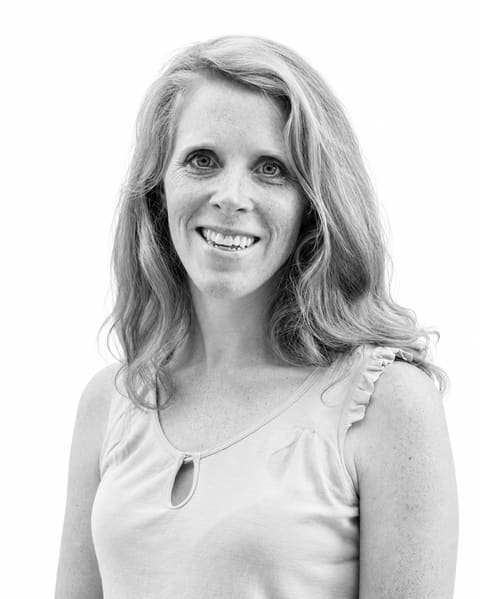
Dr. Kerry Hasler-Brooks
Guest
Read bio: Dr. Kerry Hasler-Brooks
Dr. Kerry Hasler-Brooks researches and teaches the literary history of American life, with a particular focus on race and gender, from Phyllis Wheatley to Marilynne Robinson, Sherwood Anderson to Zora Neale Hurston, Herman Melville to Toni Morrison. In her work, Dr. Hasler-Brooks pursues engaged pedagogy, literary reading as spiritual practice, and literary studies toward Christian vocation. She believes stories speak truth and can teach all of us to be the creative thinkers, engaged communicators, perceptive readers, and responsible writers the world needs. Kerry lives with her husband and two children on a small, sustainable farm in Pottstown, Pennsylvania where they toil together to produce organically-grown fruits, vegetables, and flowers for families in their CSA program, at local farmers markets, and through collaborations with local non-profit organizations.
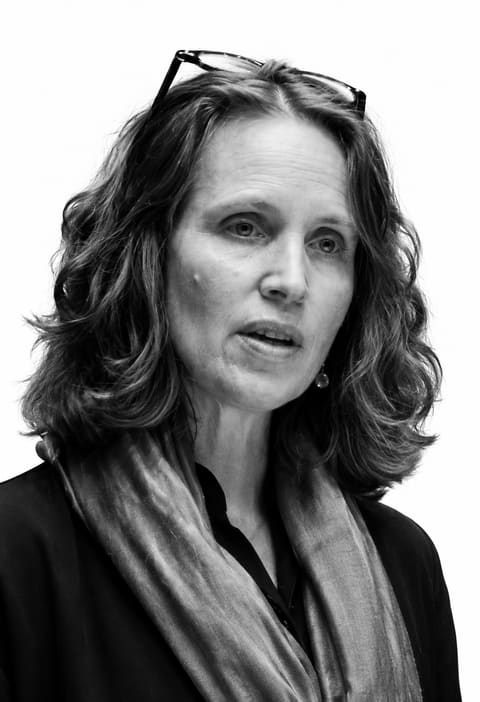
Christine Perrin
Host
Podcast Host and Contributing Writer
Read bio: Christine Perrin
Christine Perrin is a literature professor, writer, poet, and podcast host.
After teaching literature full-time at Messiah University for almost 20 years, Christine arranges her time to write, teach in Italy, and host the Composed Podcast. Christine is a graduate of Johns Hopkins University (BA in Writing Seminars) and the University of Maryland (MFA in Poetry).